
Family offices aren’t waiting for PE anymore. They’re becoming PE.
A few numbers to sit with:
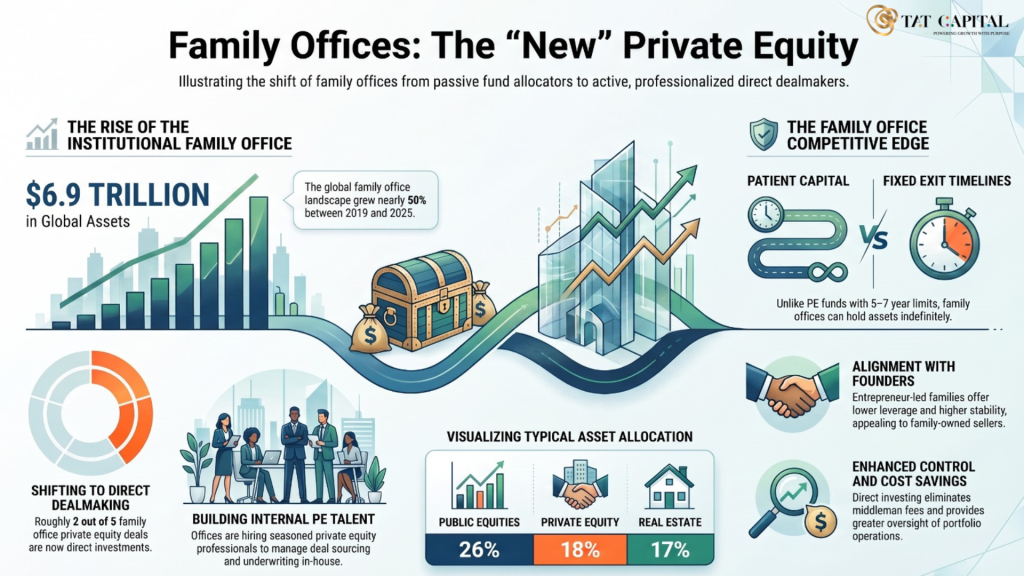
→ 9,000+ family offices globally today, up from ~6,100 in 2019 → AUM has nearly doubled to ~$6.9 trillion → 85% of independent sponsors now raise capital from family offices, not funds
This isn’t a niche trend. It’s a structural rewiring of who does middle-market deals.
Here’s the shift I keep coming back to:
Traditional PE runs on a clock. 5–7 years, then a forced exit, because LPs need their capital back to raise the next fund. Every decision — CapEx, hiring, even which problems get fixed — gets filtered through that timeline.
Family offices don’t have that clock. It’s proprietary capital. No fund life to manage around. Just a principal thinking in decades, not quarters.
As Gaurav Chamaria of AMBA Holdings put it: once you become a promoter, your time horizon, your responsibility, and the way you think about capital all change.
What that means in practice:
→ Founders selling to family offices get to keep equity, keep their team, and keep their legacy intact — instead of watching the business get “flipped” in five years → Family offices are willing to buy the messy, complicated businesses that PE walks away from, because they can afford to sit through a real turnaround → Lower leverage, more patience, less financial engineering — stability over sprint
The catch:
Going direct is hard. You need underwriting talent that thinks like an owner, not a fund manager. You need proprietary deal flow without KKR’s sourcing machine. And you need real risk discipline — a smaller office holding 3–5 direct deals can’t afford a single blow-up the way a diversified 15-company fund can.
That’s exactly why independent sponsors have become the bridge — deal-by-deal capital, real skin in the game, no massive internal team required until the platform is ready for one.
The bigger picture:
We’re watching a genuine reversion — not a fad. Family offices are going back to how industrial wealth actually used to be built: owning things, running things, and staying in them.
For founders weighing an exit, and for advisors sitting across the table from both sides, the question isn’t just “who’s offering the best price” anymore. It’s “whose clock am I selling into.”