
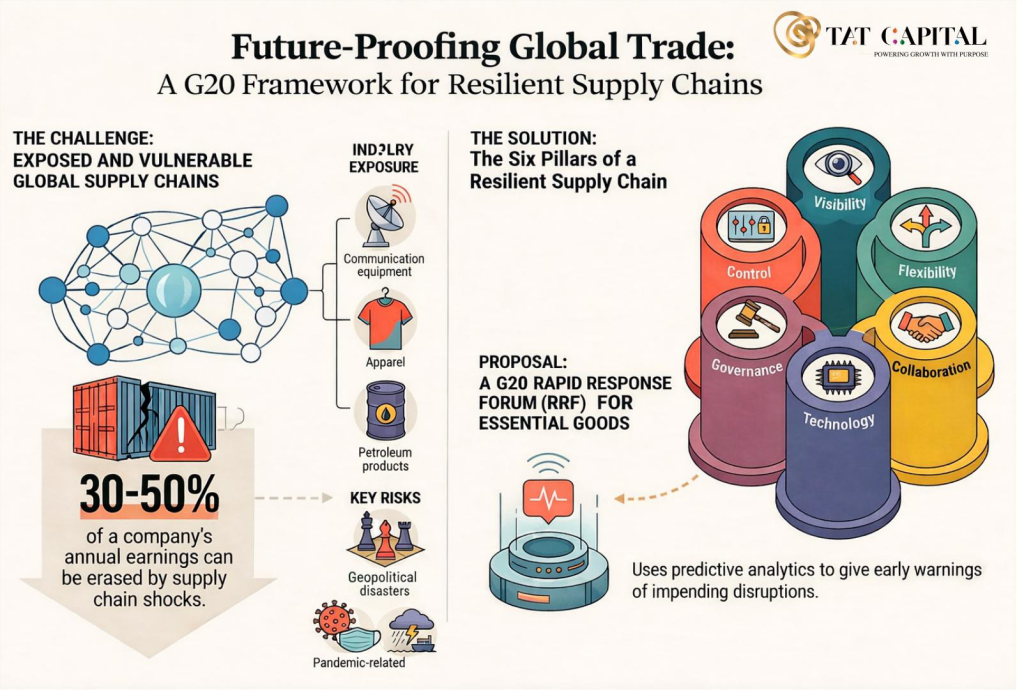
Download the full presentation here
India is rapidly emerging as a primary leader for the Global South, utilizing its historical commitment to non-alignment and its expanding economy to bridge the gap between developing and developed nations. Through high-level initiatives like the Voice of the Global South Summits and its G20 presidency, the country advocates for more equitable international governance while sharing its Digital Public Infrastructure models with other emerging markets. Simultaneously, India is positioning itself as a resilient global supply chain hub, offering a stable alternative to traditional manufacturing centers by leveraging its vast labor pool and strategic trade agreements, such as the INDAUS ECTA with Australia. These bilateral partnerships are vital for securing critical mineral resources and addressing pharmaceutical shortages, reflecting a broader shift toward regional economic security. To sustain this momentum, the nation is focused on overcoming internal hurdles related to infrastructure gaps, complex bureaucracy, and the need for specialized workforce training. Ultimately, India’s multifaceted diplomatic and economic strategies aim to foster a more multipolar and inclusive world order that empowers the entire Global South.
India’s ascent in the global supply chain is fostering collaboration across developing nations by positioning the country not just as a manufacturing hub, but as a strategic “bridge” and advocate for the Global South. Rather than pursuing isolated growth, India is leveraging its economic rise to democratize technology, advocate for equitable trade rules, and build resilient, shared value chains with other emerging economies.
Here are the key ways India’s supply chain rise is driving this collaboration:
1. Championing a Unified “Global South” Identity
India is actively using its diplomatic and economic weight to organize developing nations into a cohesive bloc with greater collective bargaining power.
- Institutional Leadership: Through initiatives like the Voice of the Global South Summits, India brings together leaders from developing countries to deliberate on shared challenges like food security, energy, and climate change.
- G20 Advocacy: During its G20 presidency, India successfully campaigned for the African Union to become a permanent member, transforming the group into the “G21” and ensuring that 55 African nations have a seat at the high table of global economic governance,.
- Collective Bargaining: As India’s manufacturing prowess grows, it reduces the Global South’s reliance on established developed economies. This shift allows developing nations to negotiate better terms regarding technology transfer and fair pricing, moving toward greater economic self-sufficiency,.
2. Sharing Digital Public Infrastructure (DPI)
Unlike traditional industrial powers that often guard their technology, India is actively exporting its “soft” infrastructure to help other developing nations leapfrog developmental hurdles.
- Tech Transfer: India is sharing its expertise in Digital Public Infrastructure (DPI), such as the Aadhaar biometric system and the Unified Payments Interface (UPI). These technologies are being offered to approximately 50 countries to help them build robust financial inclusion and public service delivery systems.
- AI for All: India promotes the idea of a “Global South AI Commons,” aiming to share artificial intelligence research and applications for the well-being of all populations, rather than restricting these advancements to rich nations,.
3. Strengthening Health and Energy Supply Chains
India’s supply chain ascent is directly supporting the critical needs of other developing nations in healthcare and sustainability.
- Pharmaceutical Resilience: Known as the “pharmacy of the world,” India’s production of low-cost generic drugs is a lifeline for many developing countries. For instance, nations like Malawi rely heavily on Indian medical supplies and affordable healthcare, with patients often traveling to India for treatment,.
- Energy Transition: Through the International Solar Alliance (ISA), India is leading a coalition to secure clean energy supply chains. This initiative helps developing nations transition to green economies by pooling resources for renewable energy technology and reducing carbon emissions,.
4. Human Capital and Diplomatic Capacity Building
India is fostering collaboration by investing in the human resources of fellow developing nations.
- Training Future Leaders: The Ministry of External Affairs hosts young diplomats from across the Global South (e.g., from Egypt, Madagascar, and Brazil) for specialized training. This builds a network of future leaders who share a common vision of development and solidarity,,.
- Educational Diplomacy: India is expanding its educational footprint by setting up satellite campuses of prestigious institutions like the Indian Institutes of Technology (IITs) in developing countries, sharing technical know-how and “educational diplomacy”.
- Labor Mobility: Recognizing the global talent shortage, India is pushing for mobility frameworks that allow skilled professionals—such as those in healthcare and technology—to move more easily between countries, addressing workforce gaps in the Global South,.
5. Creating Alternative, Resilient Trade Networks
India is actively building new trade corridors and supply chain initiatives that offer alternatives to China-centric models, providing developing nations with more strategic options.
- Regional Integration: India is positioning itself as a hub for “South-South cooperation,” where developing nations trade and invest among themselves rather than solely relying on the Global North,.
- Supply Chain Resilience: Initiatives like the Supply Chain Resilience Initiative (SCRI) (partnering with Australia and Japan) aim to diversify risks. While this involves developed nations, it benefits the broader Indo-Pacific region, including ASEAN nations, by creating more stable, diverse, and inclusive trade environments that are less vulnerable to coercion,.
Summary of Strategic Impact
| Area of Collaboration | Impact on Developing Nations |
| Geopolitics | Increased representation in global forums (e.g., African Union in G20). |
| Technology | Access to proven, low-cost digital infrastructure (UPI, Aadhaar). |
| Healthcare | Availability of affordable generic medicines and medical travel options. |
| Trade | Reduction of dependency on single-source supply chains (China). |
| Diplomacy | Shared training and alignment on “South-South” interests,. |
To transition from a rising power to a fully realized global hub, India must prioritize regulatory simplification, infrastructure modernization, and human capital upskilling. While the country has immense potential due to its demographic dividend and market size, overcoming structural bottlenecks is critical to competing with established manufacturing giants like China,.
Essential internal reforms include the following strategic areas:
1. Regulatory and Bureaucratic Streamlining
Despite recent improvements, India remains a challenging place to do business due to regulatory complexity and opacity. To attract sustained foreign investment, the following reforms are necessary:
- Single-Window Clearances: Navigating the current maze of permits is time-consuming and deters foreign investors. Implementing centralized, single-window clearance portals is essential to reduce bureaucratic hurdles and turnaround times,.
- Transparency and Stability: India must address the lack of transparency and the “arbitrary interference” that often burdens the bureaucracy. Providing a predictable regulatory environment is crucial for long-term investor confidence,.
- Standardization: Reducing non-tariff barriers, such as complex standards and technical regulations, will lower compliance costs for businesses and facilitate smoother trade integration,.
2. Infrastructure and Logistics Overhaul
Inefficient logistics and inadequate infrastructure significantly inflate production costs. Reforms must focus on integrating and modernizing these networks:
- Integrated Logistics: The effective execution of the PM Gati Shakti National Master Plan and the National Logistics Policy (NLP) is vital. These initiatives aim to integrate road, rail, and port infrastructure to lower logistics costs and improve connectivity,.
- Port and Storage Modernization: Investments in port capacity, cold storage chains, and multimodal logistics centers are required to prevent delays—such as trucks stranded on single-lane highways—which cause wastage and escalate costs,.
- Digital Public Infrastructure (DPI): Continuing to scale DPI (like UPI and Aadhaar) is essential for efficient financial inclusion and public service delivery, serving as a model India can export to the Global South.
3. Trade Policy and Tariff Rationalization
India’s trade policy has historically been inward-looking. To become a global hub, it must shift toward greater openness and integration:
- lowering Import Tariffs: India currently maintains the highest import tariffs among its East and Southeast Asian partners (averaging ~10.21%). High tariffs on intermediate goods increase costs for domestic manufacturers, making them less competitive globally,.
- Improving FTA Utilization: India utilizes only about 25% of its Free Trade Agreements (FTAs), compared to 70–80% for developed nations. Reforms should focus on simplifying Rules of Origin (ROO) and raising awareness among exporters to maximize the benefits of agreements like the India-Australia ECTA,.
- Moving Beyond Protectionism: There is a contradiction between India’s global aspirations and its protectionist trade policies (e.g., tariffs on electronics and textiles). A strategic shift toward open trade is necessary to integrate into global value chains,.
4. Human Capital and Skill Development
A “demographic dividend” is only an asset if the workforce is employable. There is currently a disconnect between the skills employers need and those the workforce possesses.
- Vocational Training: India must prioritize targeted skill development programs in high-demand fields such as automation, robotics, data analytics, and artificial intelligence,.
- Healthcare and Tech Mobility: Recognizing global shortages, India should standardize qualifications to facilitate the mobility of skilled professionals, such as nurses and tech workers, thereby positioning itself as a global talent supplier,.
- Innovation Ecosystem: Fostering a culture of R&D through tax incentives and industry-academia collaboration is critical to moving up the value chain from assembly to innovation,.
5. Strengthening Supply Chain Resilience
To capitalize on the “China Plus One” strategy, India must ensure its supply chains are robust and diversified:
- Critical Minerals Processing: Rather than just extracting minerals, India should invest in the value-added processing and manufacturing stages (e.g., battery cell production) to capture more economic value, similar to the gaps identified in Australia’s lithium value chain,.
- Rapid Response Mechanisms: Establishing frameworks to monitor and respond to supply chain disruptions (like the proposed Rapid Response Forum) will enhance reliability for global partners,.
Summary of Critical Reforms
| Reform Area | Key Objective | Actionable Steps |
| Regulation | Ease of Doing Business | Implement single-window clearances; reduce bureaucratic opacity. |
| Logistics | Reduce Costs & Delays | Execute PM Gati Shakti; modernize ports and cold storage,. |
| Trade | Global Integration | Lower import tariffs; simplify Rules of Origin for FTA usage,. |
| Labor | Workforce Employability | Align vocational training with industry needs (AI, Robotics). |
| Sectoral | Value Chain Climbing | Invest in downstream processing for critical minerals and pharmaceuticals,. |
Yes, India’s digital infrastructure exports offer a credible solution to Global South trade gaps, primarily by reducing transaction costs and democratizing access to technology. However, while these digital tools can help developing nations “leapfrog” traditional developmental hurdles, their success depends on overcoming persistent physical and regulatory bottlenecks.
Here is an assessment of how India’s digital strategy addresses these trade gaps and where the limitations lie:
1. Reducing Trade Friction through “Soft” Infrastructure
India is actively exporting its Digital Public Infrastructure (DPI) model—specifically the “India Stack” which includes Aadhaar (digital identity) and UPI (payments)—to roughly 50 countries. This export strategy addresses trade gaps by:
- Lowering Transaction Costs: By implementing systems like UPI, developing nations can facilitate seamless, low-cost cross-border transactions, bypassing expensive legacy financial systems often controlled by the Global North.
- Streamlining Customs: India is advocating for a Digital Trade Facilitation Framework (DTFF) within the G20. Technologies like blockchain and AI can automate customs procedures, potentially reducing clearance times from half a day to just 15 minutes,.
- Enhancing Visibility: Digital tools address the “information asymmetry” that plagues developing markets. Initiatives like the Unified Logistics Interface Platform (ULIP) integrate disparate systems to track cargo, a model India is using to improve its own logistics competitiveness.
2. Democratizing Technology and AI
A significant trade gap for the Global South is the lack of access to advanced technology, often hoarded by wealthy nations. India is positioning itself to close this gap by:
- Creating an AI Commons: India advocates for a “Global South AI Commons,” aiming to share AI research and applications for public well-being rather than treating them solely as commercial assets. This allows smaller nations to access high-tech solutions for healthcare and governance without prohibitive R&D costs,.
- Capacity Building: Through initiatives like the Voice of the Global South Summits, India is training young diplomats and sharing technical know-how, ensuring that partner nations have the human capital to manage these digital systems,.
3. Bridging the Trust Gap
India leverages its shared history with the Global South to position its technology as a trusted alternative to models from the West or China.
- South-South Cooperation: India promotes its digital exports not as aid, but as “South-South cooperation,” emphasizing shared developmental aspirations and historical solidarity against colonization,.
- Strategic Autonomy: By adopting India’s open-source DPI models, developing nations can build sovereign digital architectures, reducing their dependence on proprietary systems from global tech giants or coercive economic partners,.
The “Reality Check”: Structural Limitations
While digital infrastructure is a powerful enabler, it cannot single-handedly solve trade gaps without addressing underlying structural issues:
- Physical Infrastructure Deficits: Digital efficiency cannot fix physical logistics. For instance, despite digital improvements, India’s own trade is hampered by inadequate road networks and port delays,. Without parallel investments in physical infrastructure (roads, ports, cold storage), digital tools have limited impact on the movement of goods.
- Regulatory Mismatches: Digital trade often outpaces policy. In India’s own trade agreement with Australia (ECTA), digital trade and investment remain “outstanding areas” outside the scope of the initial deal, highlighting the difficulty of harmonizing digital regulations across borders,.
- China’s Dominance: Global supply chains remain heavily China-centric. While India’s digital initiatives offer an alternative, completely decoupling or re-routing supply chains requires massive manufacturing shifts that digital tools alone cannot achieve immediately,.
Summary: Can it Solve the Gaps?
| Potential Solution | Mechanism | Limitation |
| Financial Inclusion | Exporting UPI/Aadhaar to banking the unbanked. | Requires local regulatory acceptance and trust. |
| Trade Efficiency | Blockchain/AI to cut customs time by ~95%. | Physical ports/roads must still handle the volume. |
| Tech Equity | Sharing “AI Commons” and open-source stacks. | Skill gaps in partner nations may hinder implementation. |
| Supply Chain Visibility | Real-time tracking to manage disruptions (Rapid Response Forum). | Identifying a disruption doesn’t automatically fix the supply shortage. |
Can digital trade frameworks overcome physical infrastructure bottlenecks in India?
Based on the sources, while digital trade frameworks can significantly mitigate inefficiencies and reduce transaction costs, they cannot fully overcome physical infrastructure bottlenecks without parallel investments in “hard” infrastructure. Digital tools act as force multipliers that optimize existing networks, but they cannot replace the need for roads, ports, and storage.
Here is an analysis of the capabilities and limits of digital frameworks in addressing India’s infrastructure challenges:
1. The “Soft” Solution: Improving Efficiency and Speed
Digital frameworks are highly effective at removing administrative bottlenecks, which often cause delays comparable to physical obstacles.
- Drastic Reduction in Customs Time: Implementing a Digital Trade Facilitation Framework (DTFF)—utilizing technologies like blockchain and AI—can automate customs procedures. This has the potential to reduce clearance times from half a day to as little as 15 minutes, significantly boosting trade velocity without building a single new road,.
- Logistics Integration: The National Logistics Policy (NLP) leverages digital platforms like the Unified Logistics Interface Platform (ULIP). By integrating 33 different logistics-related digital systems, India aims to streamline processes and track cargo more efficiently, reducing the administrative friction that slows down trade.
- Smart Operations: Advanced technology can maximize the capacity of existing infrastructure. For example, AI-driven automation in ports (a practice observed in G20 partner Australia) has been shown to increase port-handling capacity by 40%, offering a roadmap for Indian ports to handle more volume without immediate physical expansion.
2. The “Hard” Reality: Physical Limits Persist
Despite digital advancements, physical deficiencies remain a primary constraint on India’s ability to function as a global supply chain hub.
- Inadequate Connectivity: Digital efficiency cannot fix the physical reality of a truck stranded on a single-lane highway. Inadequate road networks and limited storage facilities continue to “impede smooth logistics operations” and escalate costs due to fuel wastage and delays,,.
- Port and Storage Deficits: While digital tools can track a container, they cannot create space for it. The lack of adequate cold storage at airports and efficient port infrastructure remains a critical barrier that requires capital-intensive construction, such as the initiatives under the Sagarmala (ports) and Bharatmala (highways) projects,.
- The “Last Mile” Problem: E-commerce has revolutionized distribution, but it still faces logistical challenges due to the fragmented nature of the Indian market. Digital payments (UPI) and marketplaces facilitate the transaction, but the physical delivery is still bound by the quality of local infrastructure.
3. The Hybrid Approach: PM Gati Shakti
Recognizing that neither digital nor physical efforts are sufficient in isolation, India is attempting to merge them through the PM Gati Shakti National Master Plan.
- Digital Planning for Physical Assets: This initiative uses a GIS (Geographic Information System) platform to integrate planning across roads, railways, ports, and telecom. By using digital tools to plan physical infrastructure holistically, India aims to eliminate the siloed development that often leads to bottlenecks,.
4. Gaps in Trade Agreements
While digital frameworks are promising, they are not yet fully integrated into India’s international trade architecture.
- Regulatory Mismatches: In the India-Australia ECTA, digital trade and investment remain “outstanding areas” outside the current scope of the agreement. This indicates that regulatory frameworks have not yet caught up with the technological potential to streamline cross-border trade,.
- Non-Tariff Barriers: Even with zero tariffs, trade is often hindered by non-tariff barriers like complex Rules of Origin (ROO) and technical standards. While digital systems can help verify compliance, the underlying regulatory complexity must be simplified for digital tools to work effectively,.
Summary
Digital trade frameworks are essential but not sufficient. They solve the “soft” infrastructure problems—customs delays, paperwork, and tracking—which can unlock massive efficiency gains. However, as noted in the sources, upgrading physical infrastructure “remains a critical priority” because digital visibility ultimately cannot move goods across a congested or nonexistent physical network.
Based on the provided sources, digital frameworks are a critical force multiplier that allows India to compete with China by reducing trade friction and offering a transparent alternative model to the Global South. However, digital tools alone cannot fully displace China’s dominance without simultaneous overhauls in physical infrastructure and trade policy.
Here is an analysis of how digital frameworks aid India’s competitiveness and where the limitations lie:
1. The Competitive Edge: Speed and Visibility
Digital frameworks are helping India overcome its historical reputation for bureaucratic sluggishness, directly attacking the inefficiencies that make China a more attractive logistics hub.
- Drastic Reduction in Delays: Implementing a Digital Trade Facilitation Framework (DTFF)—which utilizes blockchain and AI to automate compliance—can reduce customs clearance times from half a day to just 15 minutes. This speed is essential for integrating into the tight “just-in-time” supply chains that China currently dominates.
- Supply Chain Visibility: To compete with China’s deeply integrated manufacturing ecosystem, India is using digital tools to offer “dynamic visibility.” Platforms that track goods from raw material to destination help mitigate risks (like shipment delays), a key requirement for companies seeking to diversify away from China under a “China Plus One” strategy,.
- Port Efficiency: By adopting AI-driven automation (similar to systems used by G20 partner Australia), India aims to boost port-handling capacity by up to 40%. This digital upgrade allows India to handle higher trade volumes without immediately building massive new physical ports, narrowing the logistical gap with China.
2. Strategic “Soft Power”: Exporting a Non-Chinese Model
India is using its digital infrastructure not just to facilitate trade, but to build a geopolitical bloc that relies less on Chinese technology.
- DPI as an Export: India is actively sharing its Digital Public Infrastructure (DPI)—such as the Aadhaar identity system and Unified Payments Interface (UPI)—with approximately 50 countries. This positions India as a technological leader for the Global South, offering a “democratized” and low-cost alternative to China’s often proprietary and expensive tech solutions.
- The “AI Commons”: India is championing a “Global South AI Commons,” positioning AI as a shared public good rather than a commercial asset hoarded by major powers. This fosters trust and long-term reliance on Indian digital standards rather than Chinese ones.
- Resilience Initiatives: Through the Supply Chain Resilience Initiative (SCRI) with Japan and Australia, India is leveraging digital interoperability to build supply networks that can withstand “black swan” events and geopolitical coercion from Beijing,.
3. The “Hard” Reality: Where Digital Falls Short
Despite these digital advances, several structural realities hinder India’s ability to fully compete with China as the “factory of the world.”
- Physical Infrastructure Deficits: Digital efficiency cannot fix physical congestion. A major bottleneck remains the reality of “a truck carrying essential raw materials… stranded for hours on a single-lane highway”. Without roads and railways that match China’s scale, digital tracking simply reports delays faster rather than preventing them.
- Protectionist Trade Policies: While China is deeply integrated into global trade, India remains relatively protectionist. India maintains the highest import tariffs among its regional partners (averaging ~10.21%), and it utilizes only about 25% of its Free Trade Agreements (FTAs). This defensive stance limits the effectiveness of digital trade corridors,.
- Manufacturing vs. Trading: There is a strategic mismatch in India’s alliances. The SCRI is limited because its partners (Japan and Australia) are free-trading economies, while India prioritizes protecting its domestic manufacturing. This divergence makes it difficult to create a unified, seamless economic bloc to rival China.
- Skill Gaps: Moving up the value chain requires more than digital logistics; it requires a workforce skilled in automation and robotics. India currently faces a disconnect between the skills employers need and those the workforce possesses, creating a barrier to high-end manufacturing competition.
Summary: Will it be enough?
Digital frameworks are necessary but not sufficient. They are successfully rebranding India from a “bystander” to a “beacon” of resilience and transparency. However, to truly compete with China, India must couple these digital wins with “hard” infrastructure investments and regulatory reforms that match the scale of its digital ambitions.
| Feature | How Digital Helps India Compete | Remaining Barrier (The “China Advantage”) |
| Logistics | Cuts customs time by ~95% (DTFF). | Physical roads/ports lag behind China. |
| Alliances | Exports DPI/UPI to Global South. | Deep supply chain dependency on China remains. |
| Resilience | Better risk tracking (Rapid Response Forum). | High tariffs/protectionism limit integration. |
| Innovation | “AI Commons” promotes shared tech. | Workforce skill gaps in robotics/automation. |
Source :
- https://www.deloitte.com/au/en/services/economics/blogs/india-rising-star-strategic-economic-partner-australia.html
- https://www.youtube.com/watch?v=H1D1T-3SexU
- https://diplomatist.com/2025/01/15/indias-rising-influence-leading-the-global-souths-agenda-in-a-multipolar-world/
- India-Australia Free Trade Agreement: Learnings and Prospects, Takshashila Discussion Document 2024-23
- The structural limits of the supply chain resilience initiative , PACNET, JULY 2021
- Creating a Resilient Supply Chain Framework: The IndiaAustralia Economic Cooperation and Trade Agreement (INDAUS ECTA) and its Significance for the G20 – G20 Policy Document
- From Bystander to Beacon: India’s Strategic Rise in the Global Supply Chain., 2024 IJNRD | Volume 9, Issue 5 May 2024 | ISSN: 2456-4184 | IJNRD.ORG
Download the full presentation here