
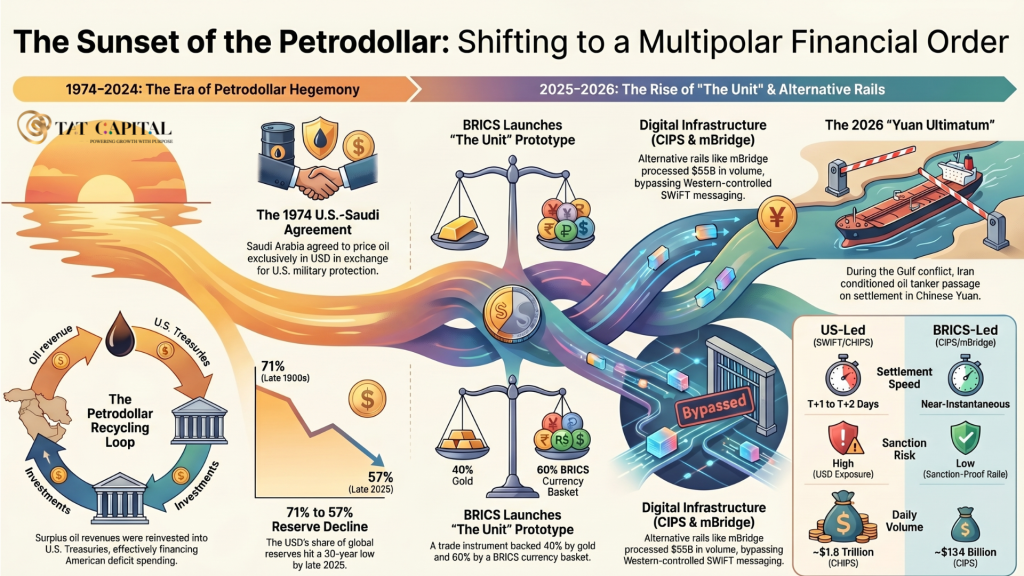
The petrodollar isn’t collapsing. It’s evolving.
For over 50 years, the U.S. dollar sat at the centre of global trade—especially oil—creating constant demand and cementing its dominance.
That era isn’t ending overnight. But it is being quietly diluted.
What’s changing?
- Saudi Arabia is diversifying (yuan oil deals, CBDC experiments)
- India, China, and Russia are settling trade in local currencies
- New payment rails (CIPS, digital currencies) are bypassing traditional systems
- And USD’s share of global reserves has slipped to ~57%
This isn’t collapse. It’s fragmentation. We’re moving toward a world where:
- USD remains the primary reserve anchor
- RMB, euro, and regional currencies gain transactional power
- Gold and digital currencies act as strategic hedge
The real shift? Not de-dollarization. But de-dependence on a single currency.
For India and emerging markets, this opens up new strategic choices— from expanding rupee trade and UPI rails to rethinking asset allocation across gold, energy, and currency exposure.
We have broken this down in detail—across oil markets, geopolitics, payment tech, and what comes next.